
Soundtrack — Dual Identity: 
• Playful momentum & creative problem-solving: Jax Jones, Mabel – Ring Ring
• Grounded sovereignty & U-mode clarity: Sia – I Choose Me
Who I am stands at a light kiss between two identities: Greek by nationality, a citizen of the world by calling—having studied in Greece and the UK, and now working in Brussels in the EUVP unit promoting people-to-people diplomacy.
While studying English Language and European Literature in the UK, I encountered Dante Alighieri’s Divine Comedy (written between 1308 and 1321—and as my upcoming book will explore, historical timing holds no coincidences).
Dante maps the soul’s journey across three distinct realms:
• Inferno: Frozen in isolation, dissonance, and the static consequences of unrepented choices.
• Purgatorio: The realm of time, sunlight, and active transformation—climbing the
seven terraces step by step.
• Paradiso: Ascending through nine celestial spheres into the Empyrean, culminating in “l’amor che move il sole e l’altre stelle” (the Love that moves the sun and the other stars).
Depending on how you look at it, Dante’s architecture acts as either the genotype or phenotype of my research project, Lingua Accord, as I slowly work toward my first book. Blending Aristotelian katharsis, Aesop’s allegories, mathematics, and the inner logic of Hebrew and other languages, I aim to surface insights obliquely—through what I call a mathematical kiss.
Notice how Dante rhymes with music theory:
• Dissonant note (Inferno)
• Voice leading & harmonic bridges (Purgatorio)
• Resonance (Paradiso)
It also forms an exotic isomorphism with Douglas Hofstadter’s Gödel, Escher, Bach—specifically the progression across formal systems:
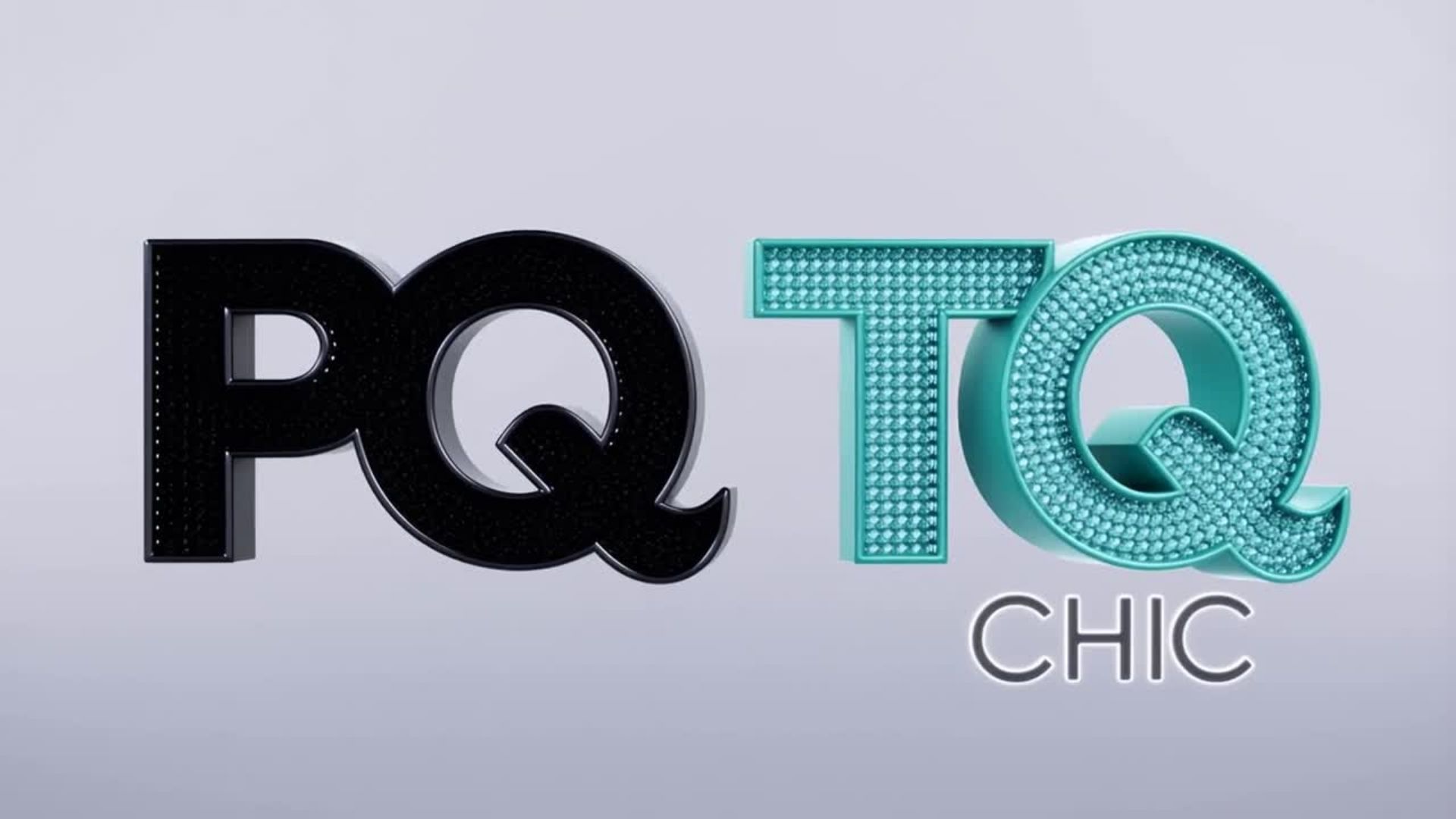
• The pq- system (R mode): Rigid rules, static boundaries (Inferno).
• The modified pq- system (I mode): Intelligence jumping out of the system to examine how it works (Purgatorio).
• The tq- system (U mode): The axiom schema of my book—where insights emerge naturally through multiplicative harmony (Paradiso).
When we pass through the R and I modes to reach the U mode, a new paradigm ignites: becoming at once a connoisseur, a strategist, and a peaceful, confident, resilient individual—able to dance across disciplines and solve creative problems while having a lot of fun.
It is worth noticing that unlike the pq systems which are based on addition, tq is based on multiplication so growth is exponential this is why you can be a lot of things at once!
It is a long journey requiring deep reading and constant re-examination—but I promise you, it will be worth it as you change from the inside out and your life will be greatly richer while having FUN
Your natural intelligence is meant to step in to fill in my intentional gaps. My work carries the nature of a flexi book in line with the latest educational trends and the neuroscience of effective learning
turning every pause and pattern into active discovery.