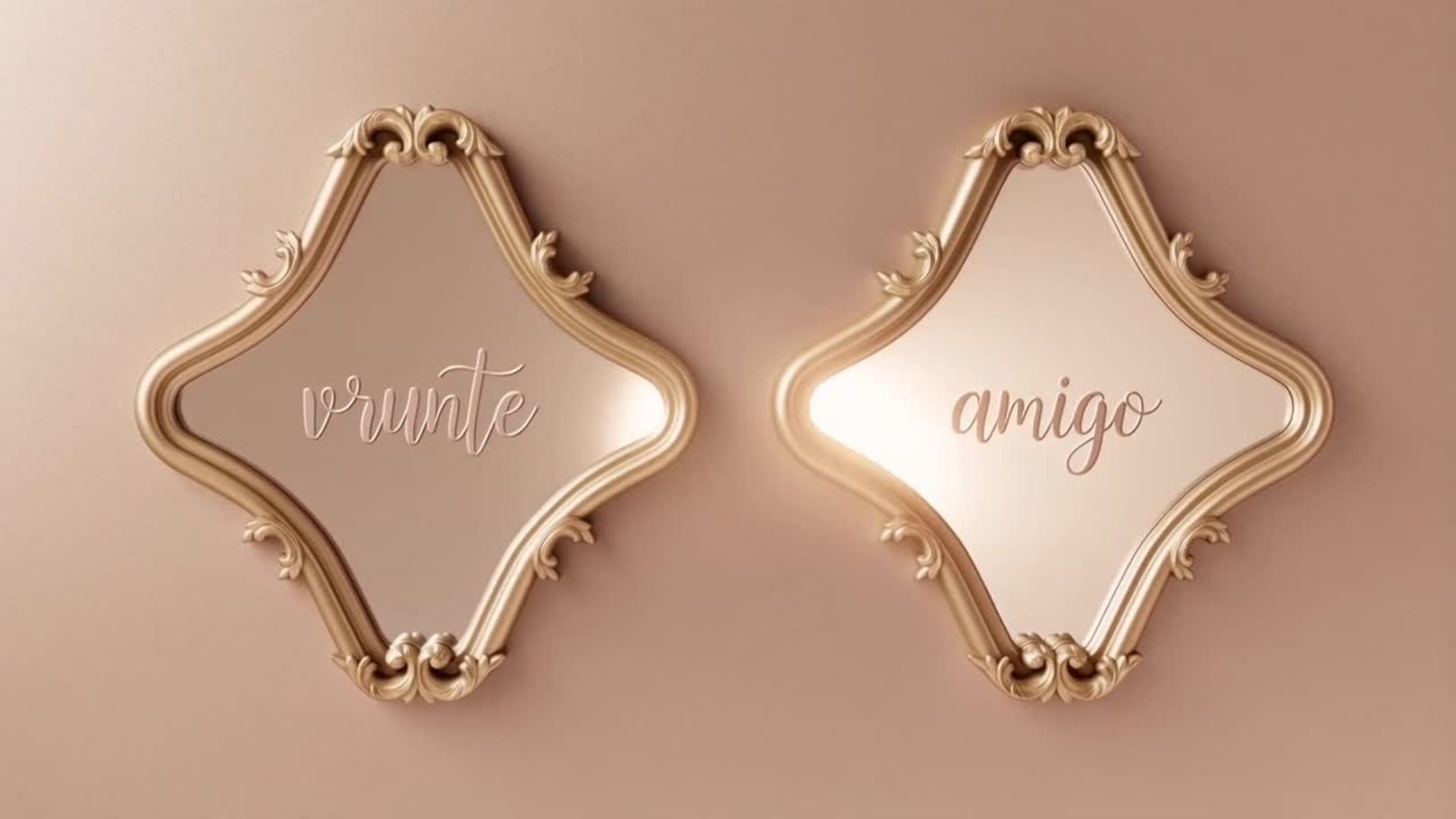
Part 1: Shedding the Label
The Riddle of tq and Amigo
A subject that interests us all is Love.
In Spanish, Te Quiero means “I love you.” For now, let’s keep things at a structural level. Those of you who read my articles know I love acronyms, so let’s refer to it simply as tq.
You also know that apart from riddles and patterns, I love premium design. One of the Leading Hotels of the World is Brussels’ Hotel Amigo—Amigo meaning “friend” in Spanish again. Let’s stay consistent.
This hotel blends Belgian heritage with refined Italian hospitality and a 16th-century origin. Built in 1522 on the site of a former prison, it got its name when occupying Spanish soldiers confused the local Flemish word for prison (vrunte) with vriend (“friend”), translating it into amigo.
https://www.roccofortehotels.com/hotels-and-resorts/hotel-amigo
Two Steps into Surrealism
Turning to its design, the hotel weaves in surrealism one step at a time:
Level 1 (Small Details): Across the public spaces and guest rooms, works by Belgian surrealists like René Magritte and Marcel Broodthaers add subtle, dreamlike wit to the traditional decor.
Level 2 (Full Immersion): Unveiled in late 2023 to mark Magritte’s 125th birthday, Bar Magritte (designed by Olga Polizzi and DO Design Studio) represents the full flowering of the hotel’s surrealist theme. Instead of small framed prints, bespoke mural-like wallpaper by Adam Ellis—enlarged from Magritte’s early 1922 works—turns the space into a self-contained realm of light, color, and sensory illusion.
Invitation to Play
So far, so good. But I think we all love play . I invite you to laugh with me—hopefully not at me 🙂
Looking at DNA and Soul
As I’ve written before, to play with something, you first have to shed its label and look into its DNA and soul.
That is exactly what happened here: a prison (vrunte) shed its label to become a friend (amigo). Gradually, you realize they share the same DNA and soul. If we do the same with tq—shedding the polite label of “love”—we stop admiring the frame from a distance and start playing inside the room.
Part 2: Play — From Mastering the Rules to Immersion to the Art of Life
I. The Strategy —Mastering the rules – the modified pq system – 1 Mirror- A. The DNA
Hofstadter’s Systems vs. Dante’s Comedy
To understand how this works, strip surrealism of its label:
At a DNA level, it mirrors Douglas Hofstadter’s pq, modified pq, and tq systems.
B. At a soul level, it rhymes with Dante’s Divine Comedy.
You first analyze the tq (Hofstadter), and then you move into Te Quiero (Dante’s Love).
Softening the Ego with Winks and Humor
If you want to help someone let go of rigid thinking (pq mode) and step outside themselves to examine how their mind works (modified pq mode), you cannot simply ask the ego to think its way out. The ego hates being corrected. Instead, you have to gently turn the prison (the ego) into a friend (amigo), until you realize in retrospect it was never a prison in the first place.
How? Through art—what Aristotle called catharsis, Dante visible parlare and what surrealism does best.
Art acts as a tilted mirror, letting you watch your mind from a distance. To soften the ego even further, you add two things: a wink and humor. The ego loves a wink because it makes it feel clever, while humor teaches it not to take itself too seriously.
You introduce the wink by via layers of music
II. The Immersion — 2 Mirrors – The Connoisseur –The tq system
True dancing, however, is forgetting you are dancing in the first place. That is where dance flirts with immersion—and where you experience what movies call Te Quiero in Spanish. The fairy tale love.
Here, you enter the world of tq systems, step inside Bar Magritte, and hear the infinite reflections of Spiegel im Spiegel (“Mirror in the Mirror”), composed in 1978 by Estonian composer Arvo Pärt. You no longer need to watch your steps or correct yourself, as you did in the modified pq system or Dante’s Purgatorio.- https://www.youtube.com/watch?v=FZe3mXlnfNc
This is the threshold of Dante’s Paradiso, and the playground of 2 mirrors. Between two mirrors, the boundaries between prison and friend dissolve. You forget yourself, and you forget that you are dancing.
In Paradiso, the soul simply moves in harmony with the music. In our tq system, Love stops being a riddle to solve or a strategy to master. It becomes pure immersion—where the dancer, the dance, and the amigo are all the same thing.
III. The Real Life Dance & Love
But what is the true art of life about anyway?
There are moment when you experience flow – the fairy tale world.- You turn a tense argument with someone you love into shared laughter through a single, playful wink.
In such moments life and love aren’t riddles to be solved by watching your steps; they are dances you master only when you laugh, drop the labels, and forget you are dancing. This process accelerates with repetition so I persevere
Yet, these moments (paradiso) cannot be a permanent state, in days you are tired you switch to inferno again, you get mad, you get angry. A more accurate way to name life mastery and love that stands the test of time is by saying it involves shortening the time it takes to notice you’re in Inferno and step out of it ( Purgatorio) experiencing glimpses of real paradiso (moments of flow and awe ) more often.
Yet long stays in purgatorio can tire you out.
If you catch yourself overanalyzing how to “master” the rules of life 🎮 (just like I caught myself doing here ),
congratulations—you’re staring into 1 mirror. Laugh at it, drop the rulebook, and step into the dancing room.🥳 When ever I do this I virtually put my headphones on and dance, go for a walk, I try to understand something complex via a short poem or art.
What works best? I meditate with a white rose, yes a white rose laughing at myself for those who find this practice surreal. It really works, you can try.
Maybe you can try it too.🥳