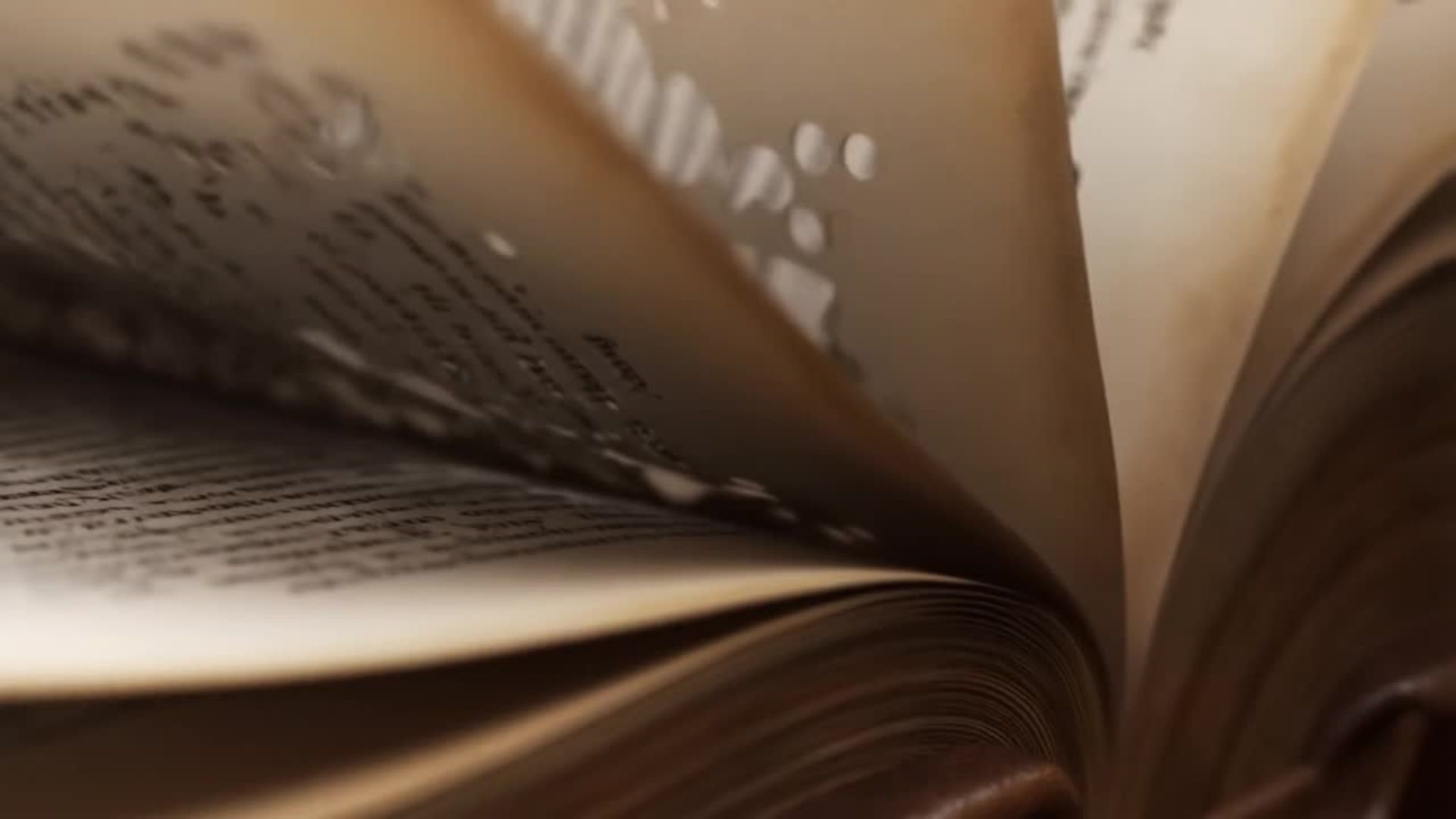
THE Nature of serendipitous PLaY
Questions …
Have you started heading towards one direction only to discover you find your self in an non envisioned route which is much better than the one you initially layed your eye on?
Is this the case or is your intention and the emerging route actually 2 facets of the same coin?
Does a coin have 2 sides or , to the trained eye does it have three? Is a coin isomorphic to a 6 facet spinning dice? What is a Life’s dice in the first place?
Leading to Serendipity….
Welcome to the fascinating world of serendipity!
The first who used the term was the English philosopher and Plititan Horace Walpore.
He used this term in a letter written on the 28st of January 1754.
He sent it to his friend Horace Mann explaining that he was inspired by a Persian fairy tale with the title ‘ The three Princes of Serendip’ where Serendip was the old Persian name for Sri Lanka. In this fairy take the heroes were constantly discovering via their observation and their luck precious objects they weren’t actually looking for .
Serendipity is an interesting word in that it relates neither to fate nor free will, it is actually a thresh hold word where in many case magic resides.
Serendipity and the worlds of poetry and architecture
Ever since representatives from various disciplines use different terms to refer to its nuances:
Poetry
- Οδυσσέας Ελύτης: refers to is as «Το Κρησάρισμα του Φωτός» (The Luminous Sieve)
- Charles Baudelaire uses the term Correspondances
Being the absolute Flâneur of the world Literature he envisioned serendipity as Layered Polyphony
Architecture
Frank Lloyd Wright (Organic Emergence):
Serendipity in the world of Architecture is the moment the building stops being a rigid grid and starts breathing in a wave like motion with nature.
Tadao Ando: «Η The Alchemy of Space and MA » (The Activation of Ma):
Ando designs concrete walls but opens up literal holes allowing the light to enter in a playfully giving a different meaning to the room every second.
Serendipity leading to the word of Spielerisch
In order to use an umbrella term that relates to all of them I will use the German word for Play .
Stepping one step further , in this article we are going to examine it through the metaphor of book design focusing on ‘The tree of codes,’
Let’s play !
Spielerisch leading to the world of the book Tree of Codes
The tree of codes
https://en.wikipedia.org/wiki/Tree_of_Codes
Tree of codes is a piece of art in the form of a book created by Jonathan Safran Fower, published in 2010. He was inspired by the book The Street of Crocodiles of Bruono Schulz , he used it but he cut out the majority of words. Removing them creates a new story.
The Die Cut Sculptural Void
The most fascinating part of its design is that every page has been cut separately with laser – die cut. The emerging holes replace the words that have been deleted from the original book of Bruno Sculz.
2 Reading modes
Having said these there are two ways to read the book, the one is linear and is associated with the passive consumer, the other is multi layered and attracts the interest of the active architect of Life.
In the first case the reader places a solid white paper behind each page which forces him/her to read only the contents of the current page.
In the second the hole is the absolute Japanese MA , the reading mode of which is the absolute perspective switch gymnastics. This corresponds to the layered polyphony. Your eye pierces through the hole and sees simultaneously pages printed on pages 2, 3, 4 or 5.
The future of the story is already present in the present, giving rise to a whole new story where a word of the depths comes to the surface and executes a mathematical kiss with the sentence you are reading at the present.
This process transforms the reading process into a 3 D sculpture.
The Spark Gap: Michelangelo’s Creation of Adam
In order for us to shed light on the nature of the cuts in the book tree of codes we are going to refer to it as the Japanese MA or envision it through the space between the hands of God and Adam in the fresco ‘ The Creation of Adam’ the most load bearing structurally tense part .
If you have a look at the fresco , God’s hand is extended , it has the absolute load bearing mathematical precision. It is the source of the Law , the stell support that carries the primodial Light. Adam’s hand on the other hand bent, languid, and weightless It represents awakening matter, pure Passion, the body, and the fluid flow seeking its vital energy
The gap between the hands is not straight, it is oblique, its asymmetrical angle represents the slant angle of one’s gaze when looking through the gaps and connecting words of different pages at the book The tree of codes.
In play theory it relates to the work of Donald Winnicott who refers to the potential space. According to him, humans live between 2 separate worlds : the internal subjective reality and the external objective reality, play taking place in the thresh hold of these two words
Going back to the book , serendipity is the emergent property that arises when the visible Life’s dice ( Aleatory play) is geometrically aligned with a prepared Inner Architecture.
The Golden Braid
In the upcoming monograph, we will dismantle the parameters of this sovereign game, examining:
- What is the nature of this prepared inner Architecture
- How does the Tree of Codes and Serendipity relate to Bach’ s Fugue
- What does it have to do with Hofstadter’s strange loops , isomorphism , Figure Ground reversal
- Which other Play principes does it touch upon
- How does it click in place with perfumery, Hebrew,& Greek Languages
- What does it have to teach about being and Active Architect of Life and more!