Master Architecture and Foundational Thesis of the Analysis:
Gödel , Escher, Bach - an Eternal Golden Braid
Douglas R. Hofstadter
A—K. The syllable means “Tree.”
It is an unpolished, indigenous sound.
On its own, this sound is completely passive. It is like the meaningless string of hyphens in Douglas Hofstadter’s pq-system—
Yet, when framed correctly, this raw piece of the rainforest becomes the anchor for the most expensive chocolate on earth.
Welcome to Lingua Accord, a digital journal for the cultural polymath, the design alchemist, and the modern flâneur.
We view untranslatable words from world languages as fragrant notes layered to create a perfect, polytonal composition:
Some anchor like a base note – deep and mysterious
Others open like a top note – bright clear shaped
by form and light
Others move like a heart note – refined,
effortlessly elegant
The Four Lenses
We decode this balance by guiding your perception through
four precise layers:
- Visible:
Surface design, typography, and material culture. - Eternal:
Timeless archetypes and blueprints. - Hidden:
Structural and mathematical codes. - Resonance:
The ultimate philosophical afterglow
The untranslatable words, the 4 lenses the Hebrew Tzeruf , Shoresh/ vowel matrices are the recursive atomic code running across the entire project.
Having said these,
5 The Pivot
This is the micro-shift. It is the precise half-step
transition where raw words from world languages collide with the high precision of perfumery, horology, architecture, gastronomy, and music.
Wonderful Life ’25 ((Extended)– the Heliotropic Strange Loop)
We trace the identical aesthetic blueprints that connect seemingly distant worlds:
- The raw botanical chaos overgrowing the pristine gold rim of an Hermès Passifolia plate.
- The tension between German animation (Spielerisch) and Japanese restraint (Shibui) locked in the steel geometry of Audemars Piguet Royal Oak.
Takeaway
Ultimately this work lies at the intersection of the Connoisseur and the Strategic Systems thinker.
LA wishes to expose a deep cosmic – exotic- isomorphism, to actually trigger you to discover and ultimately create this yourself .
Poets call this sleight of hand Beauty and Mathematicians Truth.
I invite you to step outside the grid , let’s P.L.A.Y
© 2025 Lingua Accord by Christina Katsara. All Rights Reserved.
LATEST ARTICLES
The Aesthetics of Language
Christina Katsara
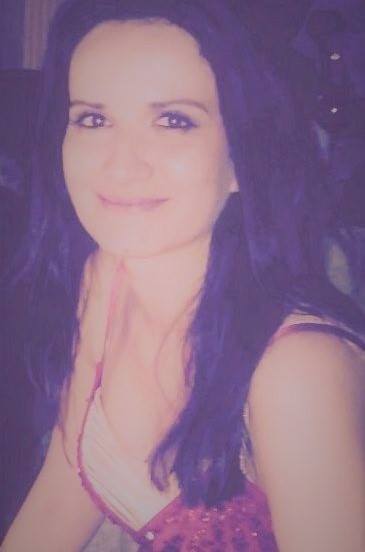
My name is Christina Katsara and I come from the luminous land of Greece.
I have an educational background in Linguistics, Literature, Poetry and Education to begin with. A constellation of seemingly random choices has brought me , in the most serendipitous way, to Brussels working for the European Parliament, – and I feel deeply grateful about this journey
I love Poetry and Aesthetics but I view them through the intersection with Mathematics: my father A.K Katsaras, my greatest source of inspiration, was a Professor of Mathematics , at the University of Ioannina Greece.
A.K acronym has , interestingly, a nested meaning, My mother is called Amalia Katsara.
I dedicate this work to her as well.
If dad has played the role of the consonant ( K) my mom has been the vowel (A) my Loving Rock, my Poetry.
The system initializes through Level 1 (Poetry/Amalia) and Level 11 (Pattern/A.K. Katsaras), forging a hidden isomorphism that sums to the number 12. This precise alphanumeric equation triggers an unconventional Strange Loop where abstract mathematics and pure emotion permanently kiss (AI)
kIss ( 1> 9)
If you add the value of the vowels found in my name both in Greek ( Χριστίνα Κατσάρα) and in English you get 22
Pythagoras believed that 12 → 1 + 2 = 3″ is associated with the world of the spirt (vowels ) and 22 → 2 + 2 = 4 with the world of the matter ( consonant)
If you multiply them you get 3X4=12 which closes the loop through a masterfully engineered harmonic bridge.
Odysseas Elytis, the Greek poet of heliotropism, the strange loop, used 3, 4 and 3+4=7 in his Poetry
If you add the value of all letters ( vowels and consonants ) of my name in English which coincides with my moving to Brussels in 2026 , entering the European Parliament and transmitting to the I- U world, I get 19 , the A and Ω of the numerical grid, the alter ego of my 12 number, the consonant, vowel alter ego!
The sum of numbers of the year 2016 equals 9( (2+0+1+6 =9) — isomorphic link to 19) while my name in both Greek and English is a series of 1s( A) AND 9s(I) like the addition of the value of all my letters of my name!
This project for me is more than a passion, it is the structural and emotional framework of my entire world!
Mind you that both 12 and 19 are upside down numbers and involve a lot of challenges, a lot of wrong notes till you make the transition to the U world.
But as we will see in this work , wrong notes are the greatest blessings in disguise which invite you to jump outside the system gently release the grips of the R world while still honouring what ever it tought to you , and be an active architect of your life (numbers 1 and 3 ( 22 ))
Everything rhymes when you enter the I>U world.
It is my sincere wish to help you and myself do the same!
I wish to help you find peace by reailsing that wrong notes are the structural tension needed to pull the bow back so that your arrow can strike the absolute center of the target.
And we will do this together the FUN way, while acquiring at the same time premium aesthetic intelligence. We will make no sudden movements, it will be the slow way like music does to return to harmony(voice layering).
I have inherited my father’s passion for patterns.
I dedicate this work to him.
I wish them to lightly kiss.:)
How can untranslatable worlds trap us in a beautiful Strange Loop, becoming the deep undertone of this synesthetic hue? {GEB]
- The Consonantal Bedrock (K): Represents the Hebrew 3-consonant root—the unchanging, rigid, and disciplined primitive framework (the Ground).
- The Luminous Space (A): Represents the fluid vowel matrix—the open, transparent room that human consciousness steps into to breathe life and light into the system (the Figure).